
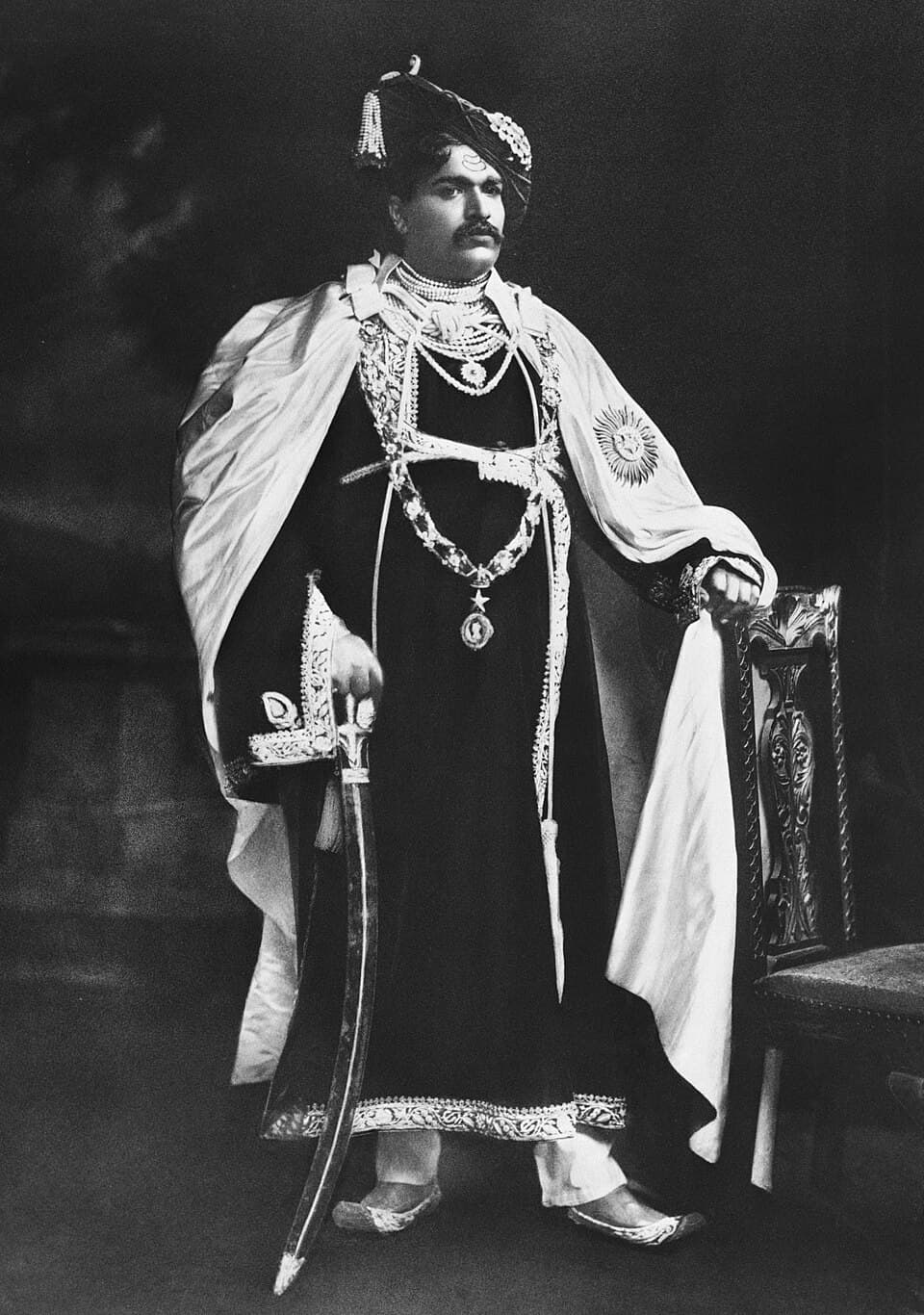
Chhatrapati Shahu Maharaj of Kolhapur (1874–1922) in an official 1912 portrait.
Chhatrapati Shahuji Maharaj
Visionary ruler of Kolhapur princely state who promulgated India's earliest affirmative action decree (50% administrative reservation in 1902), instituted free universal primary education, and actively supported Dr. Ambedkar's early movement.
Documented Biography
Chhatrapati Shahuji Maharaj (also renowned as Rajarshi Shahu) was born on 26 June 1874 as Yashwantrao Ghatge and was later adopted into the ruling royal family of Kolhapur, ascending the gaddi in 1894 upon attaining adulthood.
Influenced deeply by the ideals of Mahatma Phule's Satyashodhak movement, Shahu Maharaj made Kolhapur state an unprecedented laboratory for progressive social legislation. On 26 July 1902, he issued a landmark government decree reserving 50% of state administrative posts for backward and non-Brahmin communities—the first statutory affirmative action policy in modern South Asian history.
Recognising that administrative representation required educational access, he enacted the Compulsory Primary Education Act in 1917, funding schools and building community hostels (such as the Victoria Maratha Boarding House and hostels for Jain, Lingayat, Muslim, and Mahar students) so rural students could reside and study in Kolhapur.
Shahu Maharaj was an early and steadfast supporter of Dr. B. R. Ambedkar. In 1920, at the historic Mangaon Conference, Shahu introduced Dr. Ambedkar to the assembly as the future leader of all depressed classes in India, while also providing crucial financial backing for Ambedkar's scholarly journal 'Mooknayak'.
Key Contributions & Historical Impact
First Affirmative Action Order (1902)
Decreed 50% reservation in state appointments for backward classes on 26 July 1902, challenging entrenched monopolies over public administration.
Free and Compulsory Primary Education (1917)
Passed pioneering legislation making elementary education free and legally compulsory across the princely state of Kolhapur.
Establishment of Student Hostels
Created an extensive network of subsidized community hostels catering to students from marginalised groups across religions and castes.
Progressive Social Legislation
Legalised inter-caste marriages, enacted laws permitting widow remarriage, abolished the hereditary Devadasi dedication practice, and supported Ambedkar's 'Mooknayak'.
Major Works & Milestones
- Historic 50% Reservation Order (26 July 1902)
- Kolhapur Free & Compulsory Primary Education Act (1917)
- Presided over Mangaon Conference of Depressed Classes (1920)
- Abolition of Watan System (hereditary unpaid serfdom) in Kolhapur
Archival & Secondary Sources
Bahujan Bichara Mancha maintains documentation integrity by referencing reliable public-domain, governmental, and peer-reviewed sources.
- Gazetteer of India — Kolhapur State History & AdministrationGovernment ArchiveView Source Archive ↗
- Encyclopaedia Britannica — Shahu ChhatrapatiEncyclopediaView Source Archive ↗
- Keer, Dhananjay. 'Rajarshi Shahu Chhatrapati: A Royal Revolutionary' (Popular Prakashan)AcademicView Source Archive ↗