
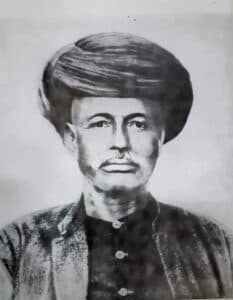
Archival portrait of Mahatma Jyotirao Govindrao Phule (1827–1890).
Jyotirao Phule
Visionary 19th-century social reformer who pioneered education for women and depressed classes, fiercely critiqued caste hierarchy, and founded the Satyashodhak Samaj to champion rationalism and universal human dignity.
Documented Biography
Jyotirao Govindrao Phule (popularly revered as Mahatma Phule) was born on 11 April 1827 in Katgun, Satara district, Maharashtra, belonging to the Mali (gardener) community. He received his education at the Scottish Mission High School in Pune, where exposure to Thomas Paine's 'Rights of Man' profoundly shaped his democratic outlook.
Recognising literacy and critical education as the essential preconditions for liberation from hereditary bondage, Phule, alongside his wife Savitribai Phule, founded India's first school for girls in Bhide Wada, Pune, in August 1848. Despite intense social opprobrium and conservative backlash, they opened subsequent schools for children of lower castes and untouchables.
In September 1873, Phule established the Satyashodhak Samaj (Truth-Seekers' Society), an association committed to rationalist inquiry, religious and social equality, and the elimination of priestly intermediaries. The society conducted marriages without Brahmin priests and advocated for the civic rights of agricultural labourers.
Phule was an influential writer and polemicist. In 'Gulamgiri' (Slavery, 1873), which he dedicated to the anti-slavery movement in the United States, he constructed a sweeping historical and mythological critique of Brahmanical hegemony, laying the foundational texts for modern anti-caste thought.
Key Contributions & Historical Impact
Pioneered Girls' and Mass Education (1848)
Opened the first indigenous modern school for girls in Pune with Savitribai Phule, establishing education as a universal right regardless of caste or gender.
Founded Satyashodhak Samaj (1873)
Organised the Truth-Seekers' Society to combat caste orthodoxy, promote rationalist social reforms, and eliminate exploitative ritualism.
Advocacy for Peasant and Agrarian Rights
Exposed the economic exploitation of farmers by money-lenders and administrative officials in works like 'Shetkaryacha Asud' (The Cultivator's Whip-cord).
Sanctuary for Widows and Orphans
Established an asylum (Infanticide Prevention Home) in 1863 to protect pregnant widows and prevent infanticide, demonstrating holistic social humanitarianism.
Major Works & Milestones
- Tritiya Ratna (Third Jewel, 1855)
- Brahmananche Kasab (Priestcraft Exposed, 1869)
- Gulamgiri (Slavery, 1873)
- Shetkaryacha Asud (The Cultivator's Whip-cord, 1881)
- Sarvajanik Satya Dharma Pustak (Universal Religion of Truth, 1889)
Archival & Secondary Sources
Bahujan Bichara Mancha maintains documentation integrity by referencing reliable public-domain, governmental, and peer-reviewed sources.
- Encyclopaedia Britannica — Jyotirao PhuleEncyclopediaView Source Archive ↗
- Government of Maharashtra — Collected Works of Mahatma Jyotirao PhuleGovernment ArchiveView Source Archive ↗
- National Book Trust — Biography of Mahatma Jotirao PhooleyAcademicView Source Archive ↗